What vision we do
We are offering to our clients
Classical 2D
Edge detection, blob analysis, geometric pattern matching and colour tools: the proven toolbox for inspection on the line.
- 01Location
Grayscale (correlation) and geometric or shape pattern matching. This is the fixture step that the other tools follow.
- 02Measurement and gauging
Edge and caliper tools, plus line and circle fitting. Distances, areas and angles come from the results of the other tools.
- 03Feature and defect analysis
Blob analysis sorts objects by shape, size and contrast, for defect detection, presence checks and sorting.
- 04Colour
Colour matching for identification, sorting and quality checks.
- 05Identification
1D and 2D code reading, and rule-based OCR.
AI
Models trained on images instead of rules written by hand, for the variation that rules struggle with.
- 01Classification
Assigns classes such as OK or NOK, or type A, B or C.
- 02Object detection
Finds and classifies several objects at once, even when they overlap. Used for pick-and-place, assembly checks and robot vision.
- 03Segmentation
Semantic segmentation (pixel-level areas) and instance segmentation (separating individual overlapping objects).
- 04Anomaly detection
Finds unknown or rare defects without needing examples of them, so there's no need to label each defect class.
- 05Deep OCR
Reads distorted or low-contrast text that rule-based OCR struggles with.
3D
Depth data for the jobs a flat image can't do.
- 01Location and matching
3D location and matching for bin picking and robot guidance.
- 02Measurement
Height and volume measurement, flatness and 3D gauging.
- 03Surface defects
Surface defect detection on depth data.
The vision platforms we program, day to day.
From simple smart cameras to PC-based deep learning — we pick the platform that fits the part, the line speed and the budget, not the other way round.
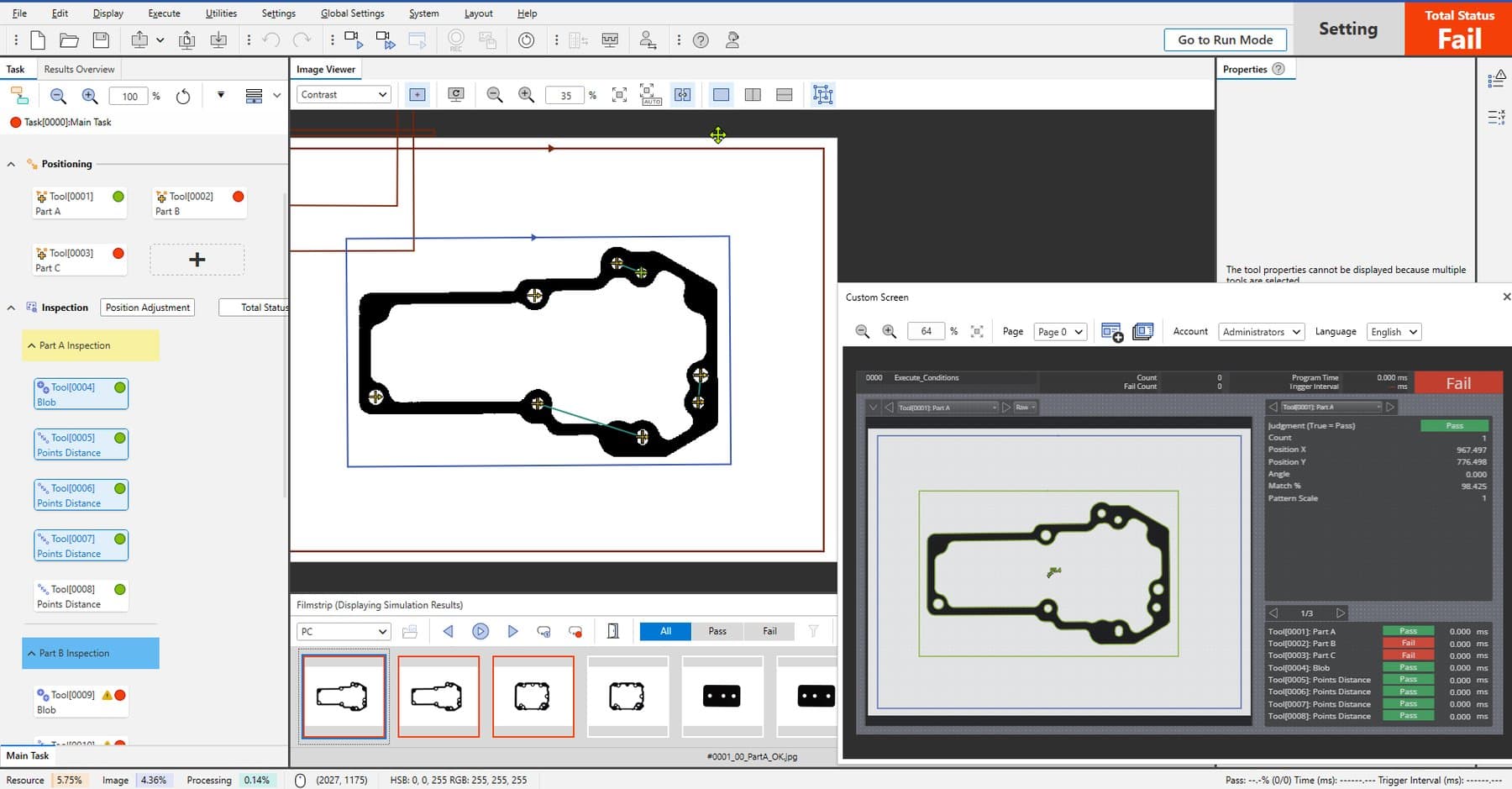
Keyence Vision Systems
Tuned for high-speed positioning, measurement and defect detection — from compact IV-series all-in-one vision sensors up to the full CV-X and XG platforms. Our go-to when changeover time and ease of setup matter as much as raw accuracy — set up, tuned and running on the line fast.
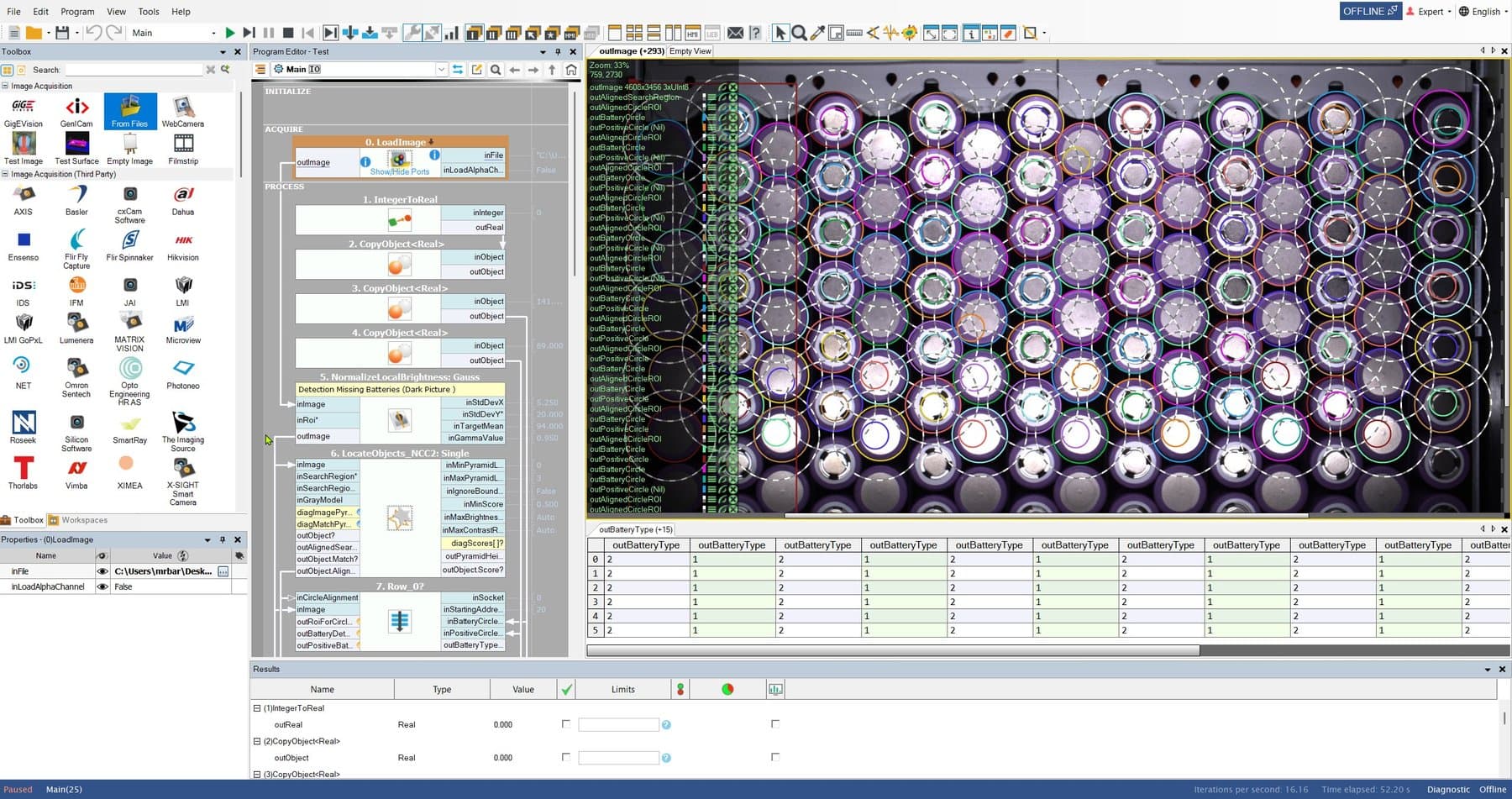
Aurora Vision Studio
A node-based platform for building advanced, custom vision applications on standard GigE and USB cameras from almost any brand — for jobs where a smart camera's built-in toolset isn't enough.
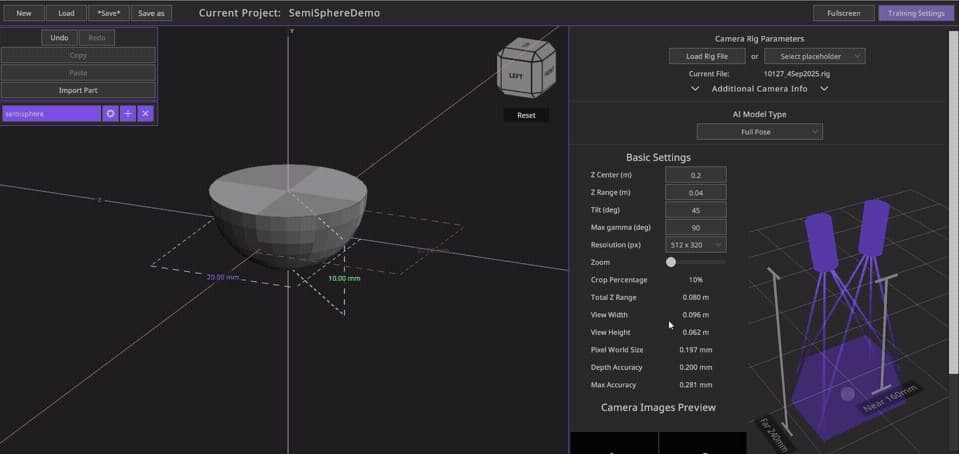
Cambrian
Cambrian's AI-driven 3D bin picking brings unmatched flexibility to robotic grasping — no CAD models, no complex setup. Point a camera at a bin of mixed or jumbled parts and it works out how to pick them.
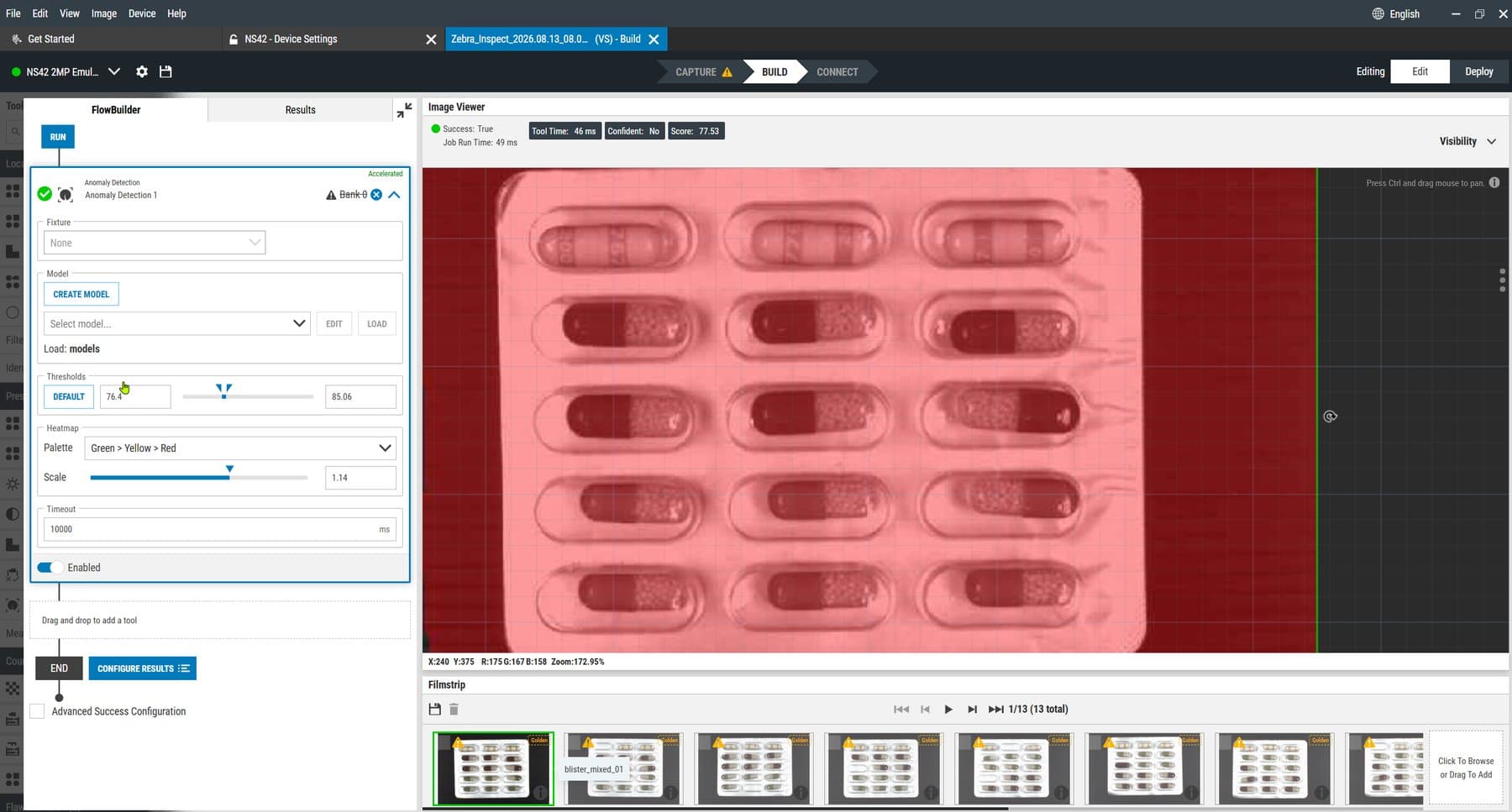
Aurora Focus
Deep-learning anomaly detection with no manual programming — train a model on known-good parts, then flag anything that doesn't match, scored and heatmapped in real time.
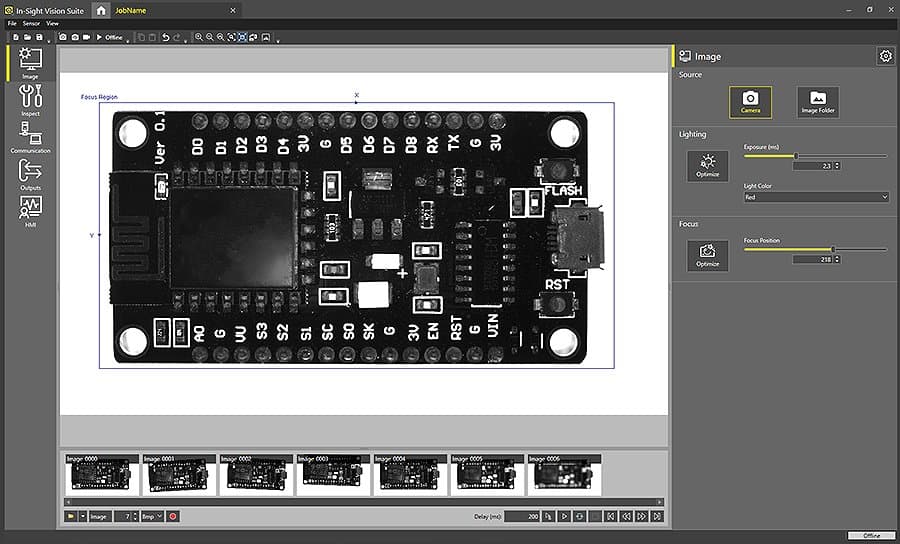
Cognex In-Sight
Industrial smart cameras and code readers built for reliable, high-speed inspection and traceability on the line — from simple pass/fail checks to 2D code reading and part guidance.
From camera to PLC.
As a machine vision system integrator based in Oranmore, Galway, we take a job from the first test images to a system that runs on your line and talks to your PLC or robot. We work with plants across Ireland.
- 01
Define the check
What has to be found, measured or read, how fast, and what counts as a pass. We start from your real parts and real defects.
- 02
Choose the setup
Camera, lens, lighting and software matched to the part and the line speed. Lighting gets as much attention as the camera.
- 03
Build and prove it
Program the inspection, then test it on good and bad parts until the results are stable.
- 04
Connect and support
Link it to your PLC or robot, commission it on the line, and keep supporting it afterwards.
Not sure which platform fits your line?
Tell us the part and the check you need — we'll recommend the right camera, software and lighting for the job.